
How Much Does a New AC Unit Cost in Illinois? Your 2026 Pricing Guide

AC technician installing a new AC unit.

With summer just around the corner, now is the best time to have a new AC installed so you can stay comfortable in the warmer months, but being such a large project, it can naturally feel a little daunting to take on. To that end, understanding your AC installation cost in Illinois is essential to avoid being overcharged. Whether you’re replacing an outdated system or installing a brand-new one, prices can vary rather significantly depending on a few key factors. In this pricing guide, we’ll break down the average new air conditioner price in 2026 and what homeowners in areas like Mokena can expect to pay.

Average AC Installation Costs in Illinois

The cost of a new air conditioner in Illinois varies widely, typically ranging from $3,500 to $12,000. For a standard, new installation, you can expect an average of $5,500.

For simpler replacements, for example, when you’re looking to swap out an existing unit without any major upgrades, the cost range falls between $3,500 and $7,500. That said, in metro areas like Chicago, you can expect things to be a little more expensive, with the AC replacement cost often ranging from $4,000 to $12,000, depending on the size of your chosen system and the complexity of the installation itself.

Overall, be it for a replacement or a new unit, most homeowners planning an AC replacement in Mokena, Illinois, and the surrounding area will spend between $5,000 and $10,000 for a complete installation in 2026.

The Difference Your System Type Makes

Now that you have a rough idea of the overall price range, let’s begin to look at what affects that range, starting with the type of system you choose, which has a major impact on your total cost. Here is a general breakdown:

Central Air Conditioning Systems

Central AC systems are the most common choice for homeowners in Illinois. These systems are the most expensive, typically costing between $5,000 to $12,000, depending on size and efficiency, but often provide the most reliable and comprehensive cooling when the weather warms up.

Ductless Mini Split Systems

Ductless systems are an ideal choice for homes without existing ductwork in place. Without the need to install new ductwork, prices for these mini-split systems generally range from $2,000 to $5,000 per zone, making them more affordable for smaller spaces, but not the best choice for larger homes.

Window and Portable Units

These smaller units are the most budget-friendly options, usually costing $100 to $800, but they can only cool individual rooms and are not suitable for whole-home comfort. The cost of running multiple smaller units around your home will also unnecessarily drive up your electricity bill, so these units shouldn’t be considered an alternative to a full AC system in larger homes.

AC technician testing a newly installed AC unit.

What Affects An AC Replacement Cost in Mokena

Mokena homes come in all different shapes and sizes, with several key factors coming together to influence your overall AC replacement cost in Mokena and throughout Illinois. Here are the most common factors you’ll need to consider when budgeting for a new AC system.

System Size and Home Square Footage

Larger homes naturally require higher-capacity systems in order to effectively cool the space, which in turn increases costs. AC units are measured in tons, and like most things, bigger systems come with higher price tags.

Energy Efficiency Rating

More efficient units with higher SEER ratings come with a higher upfront cost but can help lower your energy bills over time. For this reason, many Illinois homeowners choose mid to high-efficiency systems for the long-term savings they provide.

Installation Complexity

If your home needs ductwork modifications or installation, electrical upgrades, or additional components, your installation cost will increase along with the added work. For example, ductwork changes tend to be the most expensive additions, and can add anywhere from $500 to $2,000 to your total price.

Labor and Local Pricing

Labor costs in Illinois are close to the national average, but when you choose to go forward with your installation or upgrade will absolutely affect the price. The higher demand during peak summer months can drive prices up, so it’s best to plan ahead and get everything installed before the hot weather hits.

Permits and Codes

Certain areas around the US require permits for HVAC installation, which will add to the overall cost. Your contractor typically handles this, but it is included in your estimate and final price tag.

When Should You Replace Your AC Unit?

Not all AC issues require full replacements and new installations. When you work with TemperaturePro, we’ll give you our honest opinion on whether a new unit is required or if a repair is the better option.

Providing it has received proper, regular maintenance, most air conditioners last about 12 to 15 years. If your system is older or if it requires frequent repairs, a complete replacement might be the most cost-effective option. We recommend using the “$5,000 rule,” which suggests replacing your system if the repair costs, multiplied by the unit’s age, exceed $5,000.

Tips to Save on AC Installation Cost in Illinois

Installing a new AC system is a significant investment, but there are a few ways to bring both the upfront and overall costs down:

  • Schedule During Off-Season: Spring and fall installations often come with lower prices due to reduced demand.
  • Take Advantage of Rebates: Federal tax credits and local utility rebates for energy-efficient systems can save you hundreds or even thousands.
  • Get Multiple Quotes: Comparing estimates from licensed HVAC contractors helps ensure you get competitive pricing.
  • Choose the Right Size System: Oversized or undersized units can lead to inefficiency and higher long-term costs.

Your new air conditioner price in Illinois really depends on the size of your home, the type of system you choose, and general installation needs. While most homeowners spend between $5,000 and $10,000, high-efficiency systems or particularly complex installations can push these costs higher.

If you are considering an upgrade, working with a trusted local HVAC provider like TemperaturePro can make all the difference when evaluating AC replacement cost in Mokena. If you’re ready to schedule your service, or if you just have more questions, call us at (708) 304-4028 or contact us online today!

Do Mini Splits Turn Off When the Temperature Is Reached?

Ductless mini split HVAC systems have been gaining popularity in recent years as an affordable and efficient alternative to older AC systems. With that newfound popularity comes no shortage of questions and concerns from homeowners and building managers looking to learn more. If you’ve recently installed a ductless mini split system in your home, or if you’re considering it as an option, a common question you may be asking is: Do they turn off when the set temperature is reached?

The short answer is no, but that’s not a bad thing!

Mini split AC system visualized.

How mini splits work.

Ductless mini split systems use something called inverter technology. This allows them to adjust the speed of their compressor dynamically to meet your heating or cooling needs. They differ from traditional HVAC systems because they don’t simply turn on or off to heat and cool. Instead, mini splits regulate their air output to deliver just the right amount of conditioned air needed to maintain the temperature you set. This means that rather than having an intermittent blast of air that quickly and noticeably changes the temperature in the room, mini splits provide a constant, but weaker stream.

So do they ever turn off?

Yes, mini split systems do turn off, but not in the same way a traditional HVAC system does. When the desired temperature is reached, a mini split system will significantly lower its fan speed rather than shutting off completely. This helps in a few ways, making it easy to maintain a constant temperature, reducing energy waste, and minimizing the overall wear caused by the usual cycling that traditional AC systems experience, in turn requiring less maintenance.

That being said, in very mild weather, or particularly well-insulated buildings, a ductless mini split system may well turn off entirely for a while before it restarts. In short, they can and do shut off completely, but only under certain conditions.

This way of conditioning your home is much more efficient than alternative AC systems, which simply blast a powerful jet of air until the thermostat tells them to stop. Mini split systems, running continuously at a lower speed, not only keep a more consistent temperature, but they also often do so at a lower overall energy cost.

Adjusting the temperature with a mini split AC system.

When you should worry about your system running non-stop.

As we’ve mentioned, it’s normal for mini split systems to run constantly. However, the exception to this is when the system runs for long periods of time at high power. If you have a ductless mini split HVAC system and you’ve noticed it’s running too high for too long, this could be an indication of:

  • A dirty filter or coil
  • An issue with the refrigerant
  • Improper size for the room

If your mini split system appears to be struggling or running higher than usual, we recommend booking an inspection with TemperaturePro to take a look before your energy bill starts to rise.

Ductless mini split AC systems are designed to be smart, efficient, and responsive to ever-changing temperatures. While they don’t often turn off completely when your desired temperature is reached, that is a big part of what makes them a more efficient option compared to more traditional alternatives.

Have more questions about ductless mini split systems? Give us a call at (708) 390-7165, and we’ll be happy to help with questions and advice!

Frozen AC? It’s Not an Oxymoron: What Mokena Homeowners Need to Know About Frozen Evaporator Coils

That blast of cool air on a warm Mokena day is something we often take for granted. But what happens when your air conditioner starts acting…frosty? While it’s counterintuitive, it’s not uncommon for an AC unit in Mokena to freeze, even on a warmer day. While a frozen evaporator coil can come as a surprise, there’s no need to sweat it (at least not too much).

At TemperaturePro Mokena, we understand how crucial a functioning AC is, especially during the summers. That’s why we want to shed some light on this problem, explain why it happens, and what you should do if you suspect a frozen evaporator coil at your home in Mokena.

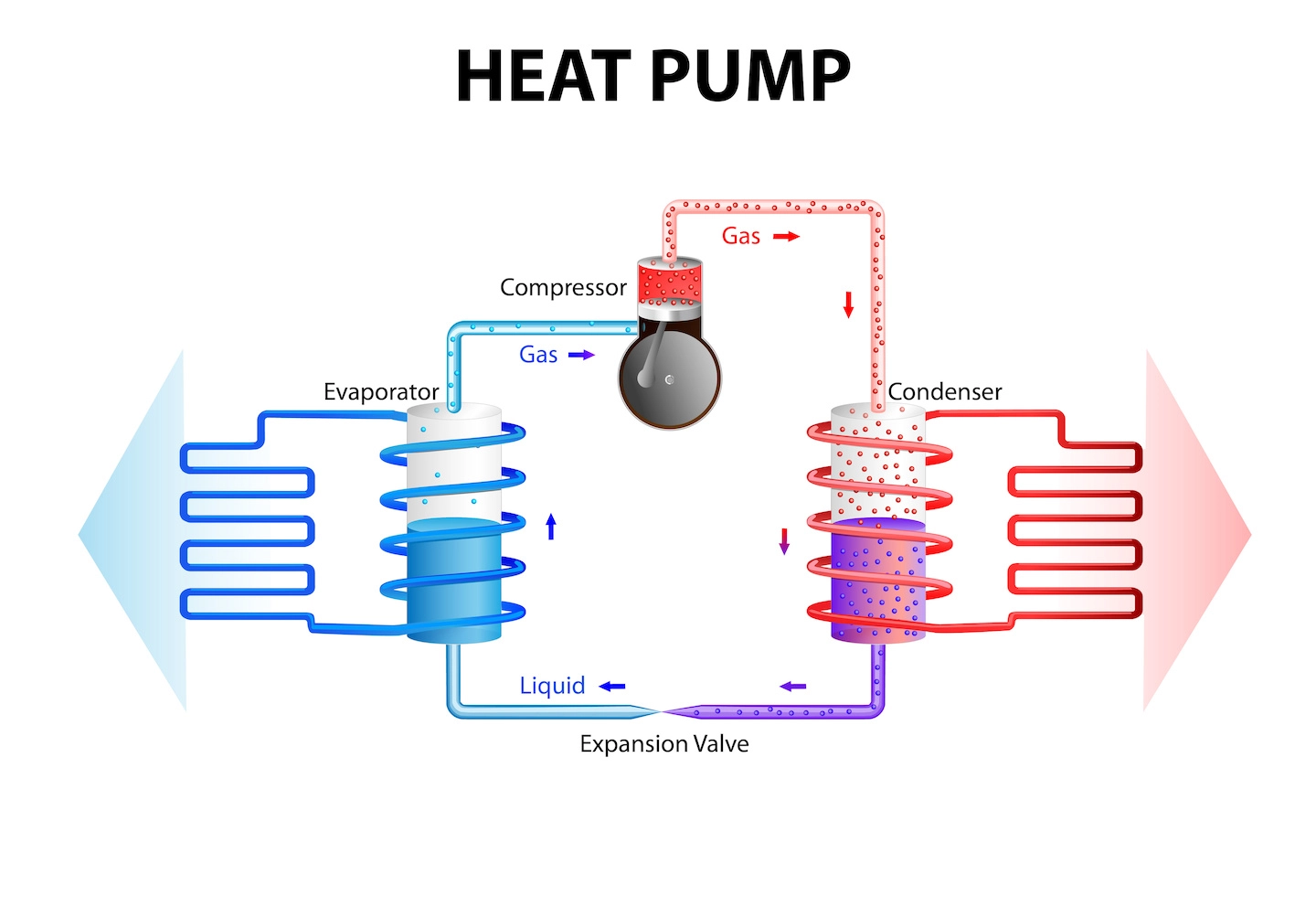
Graphic illustrating how an evaporator coil works in a heat pump air conditioner.

What is an Evaporator Coil and Why Does it Matter?

Think of your evaporator coil as the heart of your air conditioning system’s cooling process. Located within your indoor unit, this coil is filled with refrigerant. As warm air from your Mokena home is blown across the cold evaporator coil, the refrigerant absorbs the heat. This cooled air is then circulated back into your living spaces, providing that much-needed relief.

The Chilling Truth: Why Evaporator Coils Freeze Up

So, why would this vital component suddenly turn into an ice block? Several factors can contribute to a frozen evaporator coil:

  • Dirty Air Filters: The Number One Culprit. Just like the Illinois dust and pollen can accumulate on your windows, it can also clog your AC’s air filter. A dirty filter restricts airflow, preventing enough warm air from passing over the coil. This lack of warm air causes the coil to become too cold, leading to condensation freezing on its surface. Regularly changing your air filter is the easiest way to prevent this!
  • Restricted Airflow Elsewhere: Beyond the filter, blocked return or supply vents, closed dampers, or even a dirty blower wheel can hinder proper airflow across the coil. Make sure furniture and other obstructions aren’t blocking your vents.
  • Low Refrigerant Levels: A Silent Problem. Refrigerant is the lifeblood of your AC. If your system is low on refrigerant (due to a leak), the pressure in the system drops, causing the evaporator coil to get excessively cold – cold enough to freeze moisture. This is a problem that requires professional attention.
  • Mechanical Issues: Sometimes, a malfunctioning blower motor won’t circulate air effectively, even with a clean filter. Thermostat problems that cause the AC to run constantly can also lead to freezing.
  • Running the AC in Cold Weather: While Mokena doesn’t often see extended periods of cold during typical AC usage, running your air conditioner when outdoor temperatures are consistently below 60°F can sometimes cause the coil to freeze.

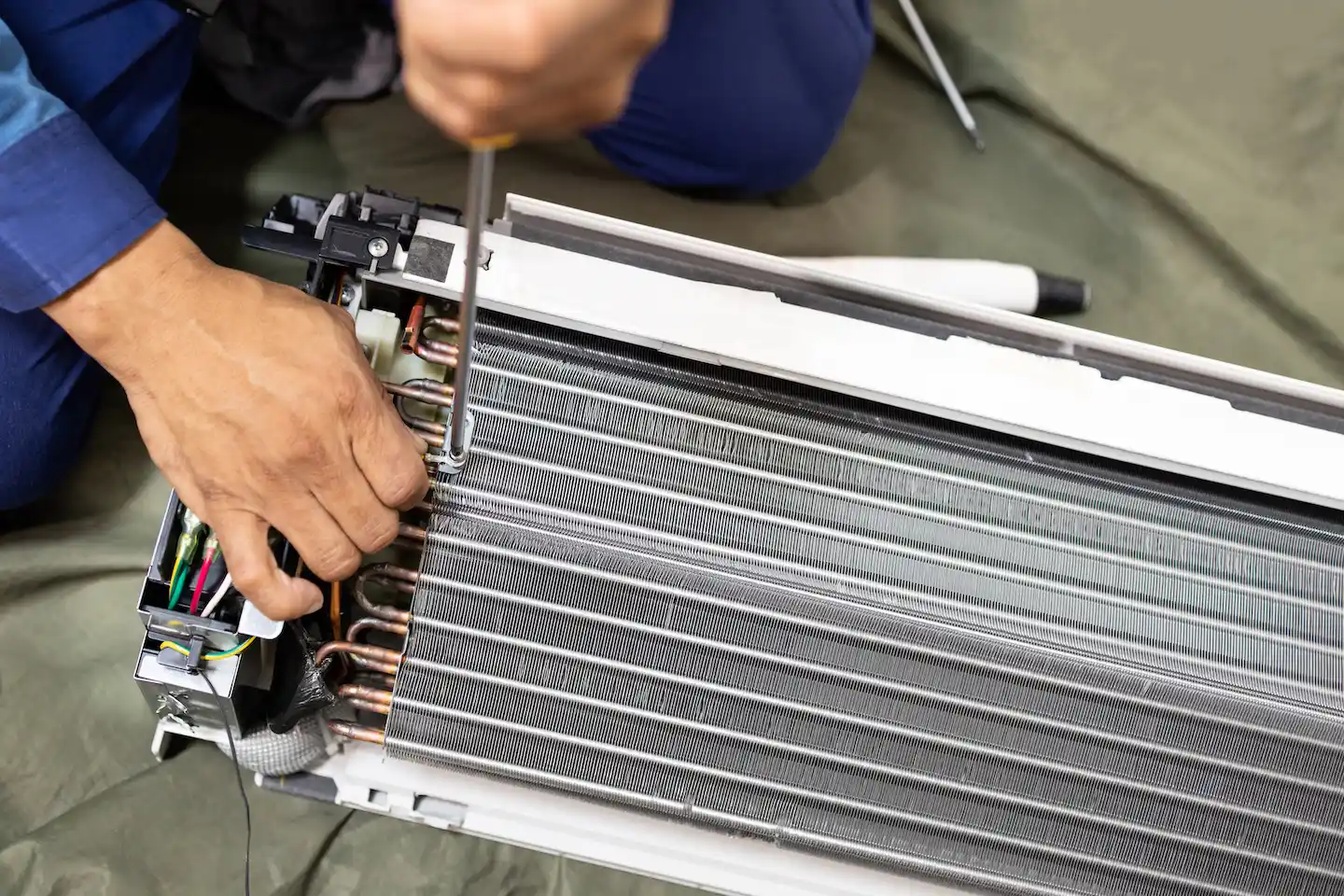
Mokena HVAC technician using screwdriver to repair AC evaporator coil.

What Should a Mokena Homeowner Do If They Suspect a Frozen Coil?

If you notice reduced airflow, weak cooling, or visible ice on your indoor AC unit, here’s what you should do:

  • Turn Off Your AC Immediately: This is crucial to prevent further damage to your system.
  • Switch Your Thermostat Fan Setting to “ON”: This will circulate warmer room air over the frozen coil, helping it to thaw.
  • Check and Replace Your Air Filter: As mentioned, a dirty filter is a primary cause.
  • Ensure Vents Are Open and Unobstructed: Take a quick walk around your home to check for any blockages.
  • Wait for the Coil to Thaw Completely: This can take several hours. Don’t rush the process.
  • Monitor After Thawing: Once thawed, turn your AC back on and see if it cools properly. If the coil freezes again, it indicates a more serious underlying issue.

When to Call the Mokena HVAC Experts at TemperaturePro

While some causes like a dirty filter are easy to address yourself, a recurring frozen evaporator coil often signals a more complex problem, such as a refrigerant leak or a mechanical malfunction. These issues require the expertise of a certified HVAC technician.

Don’t let a frozen evaporator coil leave your Mokena home feeling like a sauna! If you suspect a problem or want to ensure your AC system is running efficiently and reliably, book online with the team at TemperaturePro Mokena. We’re your local experts for AC repair, maintenance, and installation.

6 Factors in Choosing a Heating/Cooling System Replacement

6 Factors While Replacing A System

Choosing a heating/cooling system replacement is an investment in the future. The combined average service life of a furnace and central air conditioner is over 15 years. So, whatever choice you make now, you’ll be living with the results for some time to come. This includes the heating or cooling performance of the system, which has a definite impact on your day in, day out household comfort. The new unit’s energy efficiency will also directly affect the operating costs you’ll be paying every month for many seasons to come. The conclusion is clear: for optimum comfort and lowest monthly expenses, making an informed choice pays off now and years from now.

Here are six important factors that should be part of the decision-making process when choosing a heating/cooling system:

  • Get The Right Size. We’re not talking about feet and inches. In HVAC terms, “sizing” refers to the BTU capacity of a specific unit. For a furnace, it’s the BTUs of heat per hour the unit can generate. For an air conditioner, it’s the BTUs of heat the unit can extract from indoor air per hour. Each house has very individualized BTU requirements depending on factors such as square footage, the number of windows, the amount and type of insulation and other characteristics such as the air-tightness of the structure. Guesstimates or “rule-of-thumb” generalities aren’t accurate enough to properly size a unit. Utilizing industry-standard sizing software, a qualified HVAC technician can perform a sizing survey to determine the precise BTU requirements of the house, then identify a heating/cooling system with the capacity specs that match these requirements. Getting sizing right is a critical first step: oversized and undersized units waste energy, cost more to operate and tend to provide disappointing comfort performance you’ll be stuck with as long as the system is installed in the house.
  • What About Efficiency? Energy efficiency is built-in to a furnace or air conditioner. Manufacturers are required to determine energy efficiency of a unit by standardized lab tests. A unit’s energy efficiency rating is shown on the yellow EnergyGuide sticker affixed to all new units. For an air conditioner, efficiency is expressed by the SEER (Seasonal Energy Efficiency Ratio) rating. The higher the SEER numeral, the more energy-efficient the unit is and the lower monthly operating costs will be. Today, federal regulations require a minimum SEER of 13 or 14, depending on which region of the country you live in. High-efficiency air conditioners deliver SEER ratings over 20 at a higher upfront purchase price. Furnace efficiency is expressed by the Annual Fuel Utilization Efficiency (AFUE) rating. The higher the AFUE percentage, the more efficient the unit. Standard efficiency furnaces have an AFUE of 80% while more expensive high-efficiency units that capture spare heat from the exhaust stream offer AFUE over 90%.
  • Consider Short Term And Long Term. It’s important to strike a balance between initial expense and future costs. Be cautious about considering only the upfront purchase price when selecting an HVAC system. A lower-efficiency unit from a lesser-known manufacturer may indeed have a lower sticker price. However, higher monthly operating costs year after year will erase that saving and expenses imposed by reduced reliability and more frequent repairs may add up, too. Often, cut-rate units don’t offer warranty terms that are as consumer-friendly as units from recognized, name-brand manufacturers, either. On the other hand, an advanced unit with cutting edge, very high-efficiency technology may come with such a high initial price tag that the payback time from lower operating costs may be unacceptably long for you—particularly if you aren’t planning to remain in the home indefinitely.
  • Replace Both Sides Of A Central AC. A central air conditioner consists of an indoor air handler/evaporator coil and the outdoor condenser/compressor unit. Don’t attempt to save money by replacing only one half of the system or the other. All parts of a central AC are designed and engineered at the factory to operate as a matched set. Attempting to mix brand new components with old parts of the existing system will result in reduced efficiency, higher monthly expenses and, usually, shorter expected service life of the entire system, too.
  • Get A Professional Installation. Proper installation of a new HVAC unit will affect the performance and efficiency of the unit for as long as it’s in the house. Installing a central air conditioner or furnace isn’t a job for a general carpenter or a local “jack-of-all-trades” handyman. It requires specific training and expertise as well as specialized tools. An unprofessional installation that doesn’t meet industry standards can negate all the improvements in monthly expenses and household comfort you expect and deserve from a new HVAC system. Make sure it’s installed by a qualified HVAC contractor with proper certification.
  • Evaluate Other Household Factors. Certain other issues in a home will directly affect the performance and efficiency of your new HVAC system. For example, it’s false economy to connect a brand new HVAC system incorporating the latest technology to old, deteriorating household ductwork. You will lose a large volume of conditioned air through duct leakage before it even reaches the rooms it’s supposed to cool or heat. Have the ductwork tested for leaks at the time the HVAC system is installed (in many areas, local codes now require this.) If the leakage rate exceeds standards, your HVAC contractor can present options to seal the ductwork. Similarly, if you haven’t upgraded the insulation in your home in many years, it’s probably under-insulated by today’s standards. To make sure you get the full efficiency and performance improvements your new HVAC system is designed to deliver, check the level of attic insulation and upgrade if necessary to meet current Department of Energy recommendations for your local climate zone.

For professional assistance in selecting a new HVAC system, as well as qualified installation that meets industry standards, contact the heating and cooling experts at TemperaturePro by contacting us today!

Everything You Need to Know About Smart Thermostats

Smart Thermostats

When programmable thermostats hit the market some 20 years ago, homeowners who installed them realized energy savings. Their only effort was to program the thermostat to match their occupancy patterns. Anyone coming home unexpectedly had to override the thermostat, which if entered wrong, could wipe out energy savings.

As Wi-Fi apps proliferated, HVAC engineers found that they could combine the best that programmable thermostats offered with the intuitive intelligence of smart technology. Since then, smart thermostats give homeowners the same energy savings, if not more, without the learning curve for both saving energy and staying comfortable.

The technology embedded in smart thermostats now gives you control of your home’s HVAC system from anywhere you can get an internet signal. Besides energy savings, you have complete control over your home’s comfort system. By choosing the right thermostat and apps, you will also have detailed insight into your system’s performance.

Energy Savings

Unlike the learning curve associated with programmable thermostats, smart devices teach themselves. Once placed, the thermostat takes a few days to learn your thermal preferences and occupancy patterns. Sensor technology simplifies changing the temperatures for unexpected occupancy.

If your electric provider uses smart technology, you’ll be able to track your energy use on an hourly basis from anywhere. You can see the relationship between outdoor temperatures and your HVAC system’s energy usage.

The data you access will show you when your HVAC system runs the most. If those time periods occur when your home isn’t occupied, you can easily change the indoor temperature wherever you are to save energy and money. Reducing the amount of work your HVAC system does also reduces the wear and tear, which lowers the cost of repairs and increases its lifetime.

Your utility company may also offer an incentive for you to upgrade to a smart thermostat. Their representatives can also help you find a time-of-use plan (TOU) that will likely save money on your electric bill. Electric providers base their pricing on peak and nonpeak hours. These plans encourage users to use more energy during off-peak hours when the utility company pays less for it. When demand is high, you pay considerably more for each kilowatt you use. Switching to a TOU plan could lower your monthly energy bill.

Integration with Smart Home Systems

Some smart thermostats are compatible with devices like Amazon’s Echo. You can ask Alexa to change the temperature from anywhere in your home, whether it’s in the kitchen as you cook, or from the bedroom on a cold, winter night.

Thermostats that work with smart home hubs can coordinate opening your garage door or exterior doors and changing the temperatures at the same time. This feature works especially well in a well-insulated and leak-free home, since they take less time to heat or cool.

Improved Comfort

Many models of smart thermostats offer remote sensors you can place in all your rooms. Most homes have one thermostat typically placed in a hallway. The temperatures throughout your home will vary considerably because their thermal loads differ from the conditions in the hall.

When you put a remote sensor in a room and it’s uncomfortable to you, you can set the thermostat to cool or heat the air to the temperature you want. Unless you have a zoned HVAC system in your home, this ability is likely to raise your energy costs, but it will increase your comfort and give you control over the thermal conditions in that particular room.

Learning Curves with Smart Thermostats

Unlike programmable thermostats, smart devices learn your habits within a few days time, which eliminates the need to program them based on home occupancy patterns. The Nest, for example, uses a sensor that detects when your home is occupied and when it’s empty. It uses those data to establish the temperature setbacks that save energy.

Sensors on smart thermostats have simplified programming. They can tell when your home is empty, and set the temperature back automatically. Should someone come home unexpectedly, the sensor will turn the system back on.

These thermostats also give you the ability to override any settings the current home occupant has specified from anywhere. You can also find thermostats that are password protected, which gives just the people you choose permission to alter temperature settings.

Major Brands
  • The first smart thermostat on the market was the Nest, and it’s still a market leader. It has a user-friendly interface and is compatible with most HVAC systems.
  • The Ecobee is another major brand with similar features as the Nest.
  • Honeywell, one of the nation’s oldest companies, also offers a smart thermostat at half the price of either the Nest or Ecobee without sacrificing any features. Other smart thermostat brands are available and a professional from TemperaturePro can help you choose which would work best for your home.
System Compatibility

You may have to do some homework to determine whether your HVAC system is compatible with specific types and brands of smart thermostats. Newer systems generally have greater cross-compatibility than older units.

Thermostat wiring is normally the limiting factor with regard to compatibility. An expert from TemperaturePro will help you discover which thermostats will work. Installing a device that’s not electrically compatible could damage your HVAC system’s control board.

Some manufacturers offer their own smart thermostats, and the advantages to these lie in their ability to report to you how the system is operating. You’ll receive alerts about when it needs professional maintenance, if a component isn’t functioning at full capacity, or even when to change the air filter.

Heat Pumps Are Special

During the summer, heat pumps work just like air conditioners, but that all changes in the winter when they switch to heat. Most heat pumps use an auxiliary heating coil to provide emergency back-up heat. This coil uses electricity to supply heat whenever the heat pump can’t warm your home adequately within a given period of time.

Electricity alone is the least efficient way to provide home heat, and unless your thermostat knows how to shut off the emergency heat setting, the cost of heating your home will increase.

When you choose a smart thermostat, be sure that it has the capacity to override the emergency setting. The technical term is an intelligent or adaptive recovery thermostat. You may also see the term “balance point” used with compatible smart thermostats. Your TemperaturePro technician will know the best brands and types of thermostats to use with a heat pump to maximize savings in the heating mode.

Bottom Line

You don’t need a smart phone to enjoy the benefits of a smart thermostat, and they are many, like energy savings, convenience, control and comfort. The technicians from TemperaturePro can help you select the most suitable for your HVAC system, lifestyle, and your energy saving goals. Contact us today!


Everything You Need to Know About SEER Ratings

How can you pick which AC unit is right for you? Which manufacturer are you going to choose? What size is right for you? These questions can make the AC selection process very frustrating for most people, there has to be an easier way to answer these questions. Now there is! SEER ratings are here to make your AC selection process much more simple.

What Does SEER Mean?

SEER or Seasonal Energy Efficiency Ratio is a metric used to determine how efficient a given AC unit is. It is a ratio that measures how much cool air is created for each unit of electricity used. Thus, the higher the SEER rating, the more energy efficient the unit is. Most importantly, the more efficient the unit is, the more money you can potentially save in long-term energy costs!

SEER ratings are a critical factor to understand when choosing a new unit and can help you save hundreds of dollars. If you are a proponent of going green and helping the environment, a high SEER unit reduces waste and emissions compared to a lower SEER unit. However, the higher SEER rated units are more expensive, so it’s important to consider your unique needs and goals.

A simple way to help you understand SEER ratings is to think about the Miles Per Gallon (MPG) your car gets. You can buy a car with high MPG, but depending on how you drive and terrain, it will vary in efficiency. The same is true with a high ranking SEER AC unit. It is important to understand that efficient habits will improve any system’s performance.

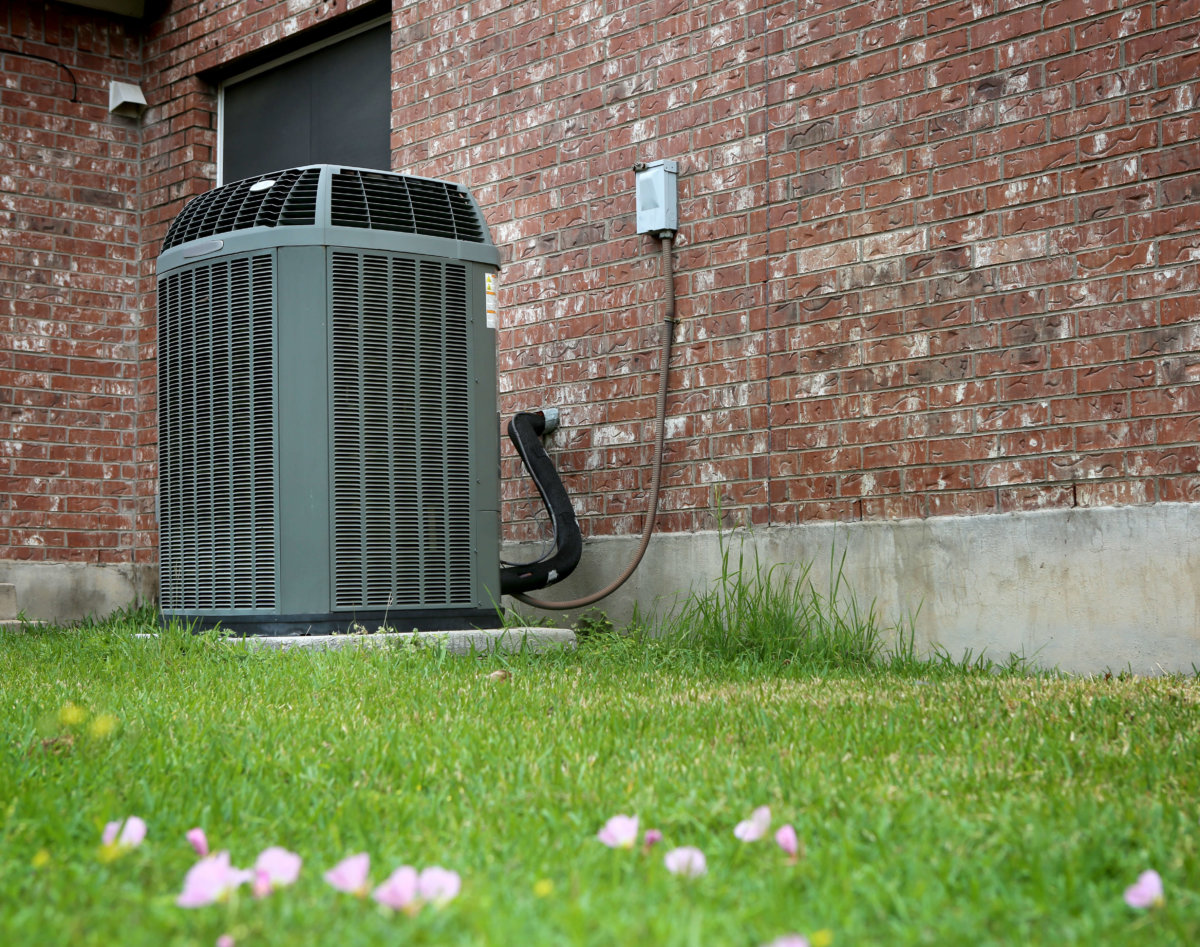
outdoor HVAC unit

The Bottom Line

All said, SEER ratings are important when considering long term efficiency and environmental impact for your unit. Higher SEER units will be more efficient but more expensive. Ultimately, it comes down to personal choice and your values for your home and family. We recommend exploring many different options when it comes to finding a new unit. Make sure to call your local TemperaturePro with any questions!

5 Things To Do When Your AC Goes Out

How can you keep your house comfortable from this unbearable summer heat? The best thing you can do is keep you AC unit performing properly throughout the entire duration of summer. But how do you keep your AC performing properly? Read on, we’ve got 5 tips to help you stay cool and comfortable.

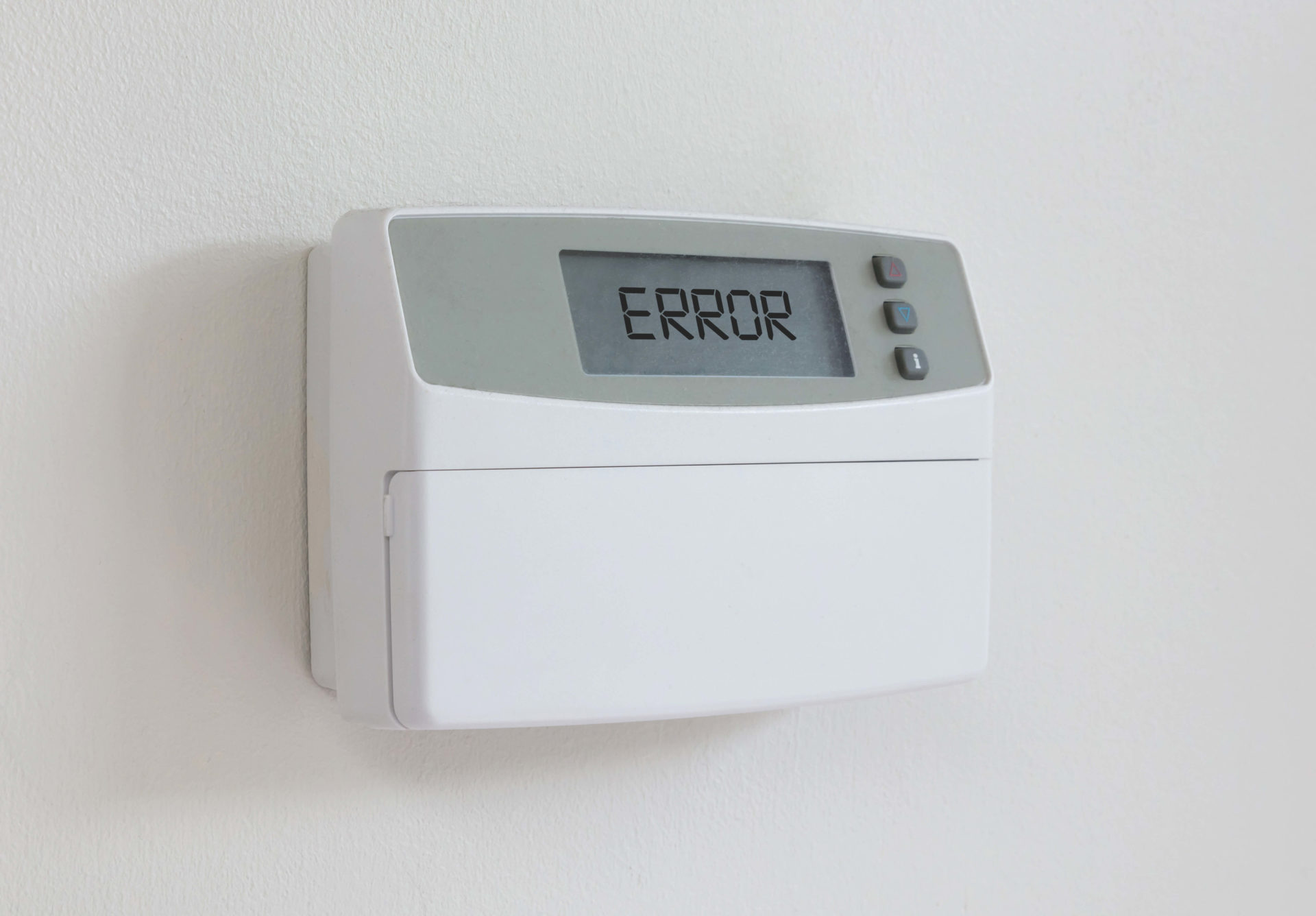
error on thermostat
  1. Check Your Air Filter

Your air filter is your first line of defense from hot, dusty air. It’s vital to keep your air filter clean and regularly changed to keep the clean, cool air throughout your system. If your filter is clogged or dirty, air flow will be restricted and cause your AC to malfunction. Studies have shown that a dirty air filter can reduce AC efficiency by nearly 10%!

  1. Check Thermostat Batteries

We know, it can’t be that simple right? You’d be surprised! Sometimes the simplest solutions get overlooked, but this one can have a huge impact on your system’s performance.

  1. Check The Circuit Breaker

First locate you circuit breaker in the breaker box, then flip the switch on and off and see if your issue is fixed. Circuits can get messed up all the time so this can be a quick an easy fix if you know what to look for. If, however, you don’t notice any changes after flipping the switch, you might want to call an electrician to see if you have a more complex issue.

  1. Check The Coil On The Outside Of Your Machine

A well maintained condenser coil is crucial to having an efficient AC unit. It your coil is covered in debris like leaves or grass just take a hose and gently spray it all away. Just another great example of how important it is to keep your unit clean and maintained.

  1. Call Your Local TemperaturePro!

We’re here to help! Our certified technicians are always help to lend a helping hand and our services are fast, effective, and affordable. We’re proud of the work we do and hope to keep all of our customers cool and comfortable this Summer!

5 Ways Great AC Can Improve Your Life

  1. No more sweat stains!

Yes, we know it doesn’t take a rocket scientist to know that air conditioning makes you sweat less. Good AC has saved millions of people from embarrassing sweat stains and clingy clothes. But how annoying can sweat really be? Deodorant producer Sweat Block sites that the average human sweats around 278 GALLONS each year and over 360 million people have overactive sweat glands. That much sweat every year makes you wonder how much more there would be if we didn’t have air conditioning. I’d rather now think about that.


  1. Clear your skin!

Fashion trends tend to change every year, but one thing has always been in style– clear and healthy skin. People spend hundreds on products for their skin, but ignore other factors that could be negatively affecting it! By choosing the wrong AC system, you could be living in a moisture-free environment. This leads to dry skin, which is worse if you have conditions like eczema, rosacea, or psoriasis. Even if you do not suffer from any of these conditions, dry air can cause your skin to itch and flake. Even though this problem is hard to detect, it is very easy to fix! Consider using a humidifier to improve the indoor air quality of your home and ultimately improve the quality of your skin!


  1. Increases productivity

Do you know that feeling when it’s so hot that all you want to do is lie down and not move… at all? Yeah, we know that feeling, too. A study conducted by the Helsinki University of Technology found that productivity increases between the climate controlled temperatures of 69.8 and 71.6 degrees fahrenheit. More so, AC can actually save you MONEY! A Cornell study by professor Alan Hedge found that a more comfortable thermal zone saves employers about $2 per worker, per hour. That’s savings of $800 a week for a company of only 10 employees! Well, there you have it…  AC can increase productivity AND save you money!


  1. Clean air

*Breathe in. Breathe out.* Chances are that if you are reading this in the comfort of your own air-conditioned home you just inhaled some premium, good ‘ol fashioned O₂. Good stuff, right? Well, there’s lots more where that came from – especially if you have an air scrubber with your AC unit. These powerful machines take all the pollen and pollutants out of the air to ensure you are breathing safe, clean air. Temperature is all-important when dealing with an AC system, but indoor air quality can make or break your environment. Nobody wants to breathe in musty air, and nobody should have to! Clean air can help with allergies, asthma, and other respiratory issues, so crank the AC and breathe easy!


  1. Reduce unwanted bugs

Summertime means heat, and with that heat comes bugs. And we don’t like bugs. We’re guessing you don’t either, especially when they are sneaking into your home like James Bond on his tippy toes. Good news is, you can use your AC unit as your own personal bug destroying infantry! Creepy crawlies tend to be attracted to warm and moist climates. Keeping your AC unit set to 77 degrees or below can repel roaches and other pesky insects from your home. In addition, one of the simplest ways to keep bugs out is to keep windows and doors shut. Make sure you are comfortable with your AC so there is no chance of insects creeping in. With these easy tips, you should be well on your way to keeping bugs out of your home… and that’s definitely a good thing!


Now that you know exactly how proper air conditioning can improve your life, it is time to take a step back and evaluate your HVAC system. Does your system meet all of your needs, or is there a little left to be desired? If you are not satisfied with your current HVAC situation, call us. TemperaturePro’s experts will have you sittin’ pretty in your own home in no time!

Reduce Your Summer Cooling Costs in 6 Easy Steps

With summer just around the corner, it’s time to start dialing your home’s temperature down a few degrees. If you’re like us, you like to keep your air conditioning bill low; here are a few ways to keep your cooling costs as low as possible even in the peak of the summer heat!

1. Turn on those fans!

This is a very easy way to keep the temperature in your home down without having to rely on the thermostat. You can use either ceiling or standing fans to keep the cool air circulating throughout your home.

2. Seal windows and doors

Poorly sealed doors or windows can sometimes let the hot air from outdoors in, which means that your AC will have to work even harder to cool your home. Make sure that any cracks or holes are filled in or perhaps use a weatherstrip to ensure a strong seal.

3. Properly maintain your home’s AC system

Taking care of your home system is crucial if you want to maximize energy efficiency, in fact, if you’re not properly maintaining your system you’ll cost yourself more money in the end. Keeping up with all routine maintenance and cleaning your equipment (air filters, floor registers, condenser coils, evaporator, etc.) will keep your home cool this summer without costing you a fortune! If you’re not sure if you’ve been taking good care of your system, call us! We’ll send one of our expert service techs to take a look for you.

4. Get a programmable thermostat

When you’re out of the house or asleep you don’t need to cool your home as much as you normally would, that’s why programmable thermostats are such great tools! You can even set it to gradually cool your home before you get home instead of drastically lowering it immediately as you arrive. This is a great way to make your home more comfortable and save some money while doing it.

5. Use window treatments

The heat from the sun can beat down into your home through the windows and increase the internal temperature. This will cost you more and make your AC do extra work. Consider investing in some shades or curtains to block these unwanted rays.

6. Utilize outdoor grills

Cooking generates a lot of heat, a great way to cool your home is to keep the extra heat outdoors is to do the cooking outdoors as well. Get outside and fire up the grill, that’s one of the best parts of the summer! You can also save extra by hand washing dishes or hanging up your wet laundry to dry on a clothesline. Dishwashers and dryers can generate lots of extra heat indoors so if you want to save some money on your cooling bill consider some outdoor alternatives.

Well, there you have it, six easy ways to keep your home cooler in the summer. If you’re having any trouble with your cooling system or just have a question and want an answer, give us a call! At TemperaturePro, we’re always happy to help. So stay cool & have a great summer!

Don’t Be Fooled! Let’s Decode HVAC Terminology.

Have you ever had an HVAC technician in your home and they use terms you don’t understand at all? Or you call an HVAC company to describe a problem you’re having and their response includes confusing words? What are they talking about?!

You’re not an experienced HVAC technician and you don’t have the background knowledge to understand these advanced terms. But it’s important to know what your technician is talking about when it comes to YOUR heating and cooling systems.

We are committed to making sure our customers are well-informed about HVAC systems. That’s why we wrote this blog post!

Let’s decode some HVAC terminology you hear but might not recognize or understand…

Airflow volume: the amount of air circulated in a space measured by cubic feet per minute.

Condenser: the hot side of an air conditioner or heat pump that can transfer heat to air.

Coil: performs heat transfer to air when mounted inside an air unit or ductwork.

Damper: sheet metal plates that can be opened or closed to control the flow of air into a zone.

Compressor:  A pump that increases the pressure of refrigerant gas.

Drip pan: a container for catching material that drips from above.

Freon: the cooling agent used in most air conditioning systems that actually creates cool air.

Gas heater: space heater used to heat by burning natural gas, liquefied petroleum gas, propane or butane.

Electric heater: electrical energy is converted to heat.

Heating coil: part of system that allows electricity to act as fire.

Intermediate fluid: a liquid or gas used to transfer heat between two heat exchangers.

SEER: Seasonal Energy Efficiency Ratio; the rating of a unit for the cooling output during a typical cooling-season divided by the total electric energy input during the same period. The higher the unit’s SEER rating the more energy efficient it is.

Congrats, you’re an expert on everything HVAC now! Ok, not really, but you know more than you did before! Now that you are familiar with these terms, you are one step closer to understanding your HVAC technician and your HVAC issues.

Share this article to keep your friends well-versed in HVAC terms!